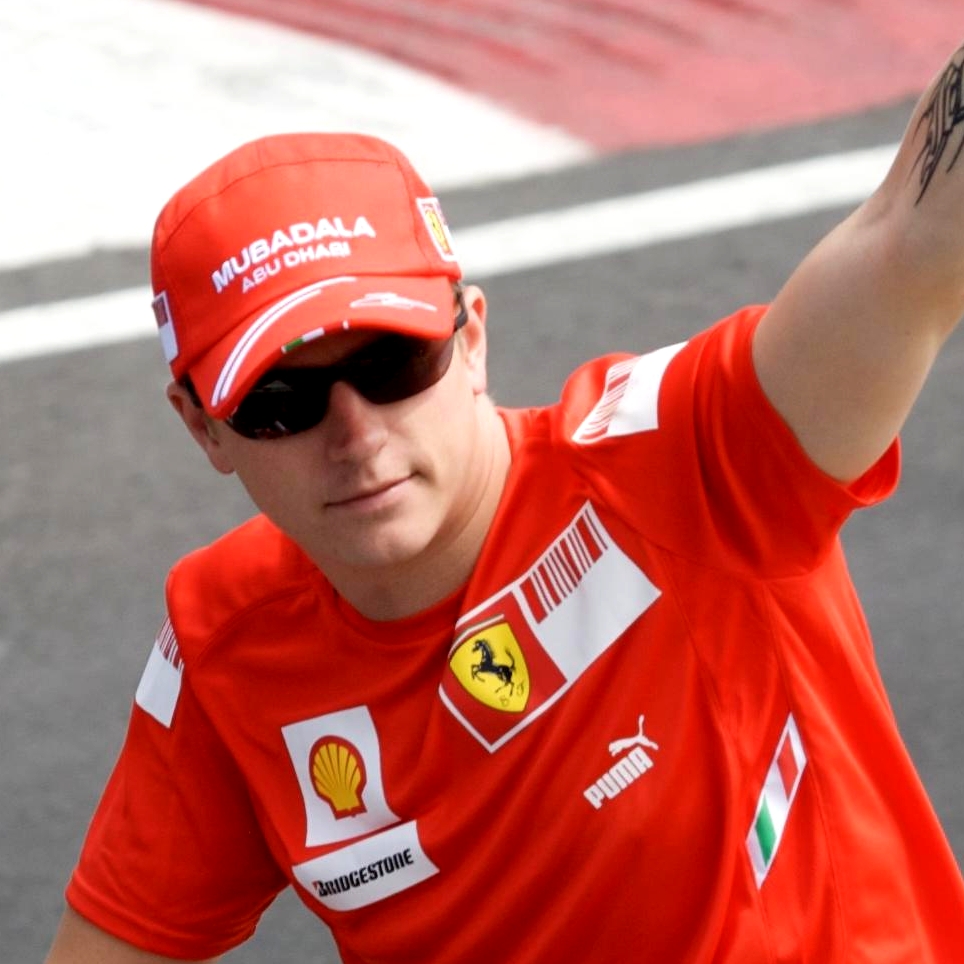
The 2007 F1 Season: A Title Fight for the Ages, Almost Undone by Fuel
The 2007 Formula 1 season delivered one of the most nail-biting, unpredictable, and ultimately controversial championship climaxes in the sport's history. It was a season where three drivers – two-time reigning champion Fernando Alonso, rookie sensation Lewis Hamilton, and the enigmatic Kimi Raikkonen – battled it out until the very last lap of the final race. When the dust settled in Brazil, it was Raikkonen, "The Iceman," who emerged victorious, snatching the drivers' title from under the noses of his McLaren rivals.
Ferrari and Kimi Raikkonen had achieved the seemingly impossible, overturning a significant points deficit in a dramatic late-season surge. The celebrations were euphoric, the narrative complete: an underdog triumph. Yet, mere hours after the checkered flag waved, an alarming announcement from the FIA threatened to rewrite history and deny Kimi Raikkonen his first, and only, F1 world championship. A fuel scandal had emerged, putting the legitimacy of his hard-won kimi mundial f1 title in jeopardy.
The Dramatic Climax of the 2007 Brazilian Grand Prix
Heading into the season finale at Interlagos, São Paulo, the championship picture was tantalizingly poised. Lewis Hamilton led with 107 points, followed by Fernando Alonso on 103, and Kimi Raikkonen trailing with 100. For Raikkonen to win, he needed to secure victory while hoping his rivals faltered. It was a long shot, but not impossible.
The race itself was a spectacle. Hamilton, starting second, made a crucial error early on, running wide and dropping down the order. Further gearbox issues plagued his race, pushing him to seventh. Alonso, starting fourth, couldn't quite match the pace of the Ferraris. Raikkonen, starting third, drove a masterful race. With a perfectly executed two-stop strategy and a timely pit stop by his teammate Felipe Massa, who allowed him through, Raikkonen took the lead and crossed the finish line as the winner.
His victory meant he reached 110 points. Hamilton's seventh place brought him to 109, and Alonso's third place put him on 109 as well. Kimi Raikkonen was world champion by a single point, a testament to his relentless pursuit and Ferrari's strategic brilliance. The paddock erupted in joy and relief for the Finn, who had battled through a season marked by fierce competition and internal team strife at McLaren.
The Post-Race Bombshell: Fuel Irregularities Emerge
Just as the champagne was drying on the podium and the world was celebrating Raikkonen's incredible comeback, the FIA released a statement. Inspections of the fuel samples taken from several cars, specifically those of BMW Sauber and Williams, had revealed potential irregularities. The crucial detail was the fuel temperature.
Formula 1 regulations stipulate that fuel must not be more than 10 degrees Celsius below the ambient temperature, or below a certain absolute minimum (typically 10°C, though specific rules can vary year-to-year). The purpose of this rule is to prevent teams from cooling their fuel excessively. Colder fuel is denser, meaning more fuel can be stored in the same volume, allowing for a slight performance advantage by carrying more energy, or a lighter car for the same amount of energy. It's a technicality that can, at the margins, influence race pace.
The cars under scrutiny were:
- Nico Rosberg (Williams-Toyota) - finished 4th
- Robert Kubica (BMW Sauber) - finished 5th
- Nick Heidfeld (BMW Sauber) - finished 6th
- Kazuki Nakajima (Williams-Toyota) - finished 10th (not in points, but still under investigation)
The Stakes: How Disqualification Could Have Rewritten History
The ramifications of a disqualification for the BMW Sauber and Williams drivers were enormous, particularly for the championship outcome. Let's break down the potential impact:
- Nico Rosberg, Robert Kubica, and Nick Heidfeld had finished in critical points-scoring positions (4th, 5th, and 6th respectively).
- Lewis Hamilton, who had endured a troubled race, finished in 7th place, securing 2 points.
If Rosberg, Kubica, and Heidfeld were disqualified, their positions would be vacated, and all drivers behind them would be promoted up the order. This would mean Lewis Hamilton, originally 7th, would be promoted to 4th place. A 4th place finish would earn him 5 points, not 2.
Let's do the math:
- Kimi Raikkonen's final tally: 110 points (unchanged).
- Lewis Hamilton's original tally: 109 points.
- Lewis Hamilton's revised tally (if others disqualified): 107 (original) + 3 (additional points from 7th to 4th) = 112 points.
Suddenly, with 112 points, Lewis Hamilton would have been the 2007 Formula 1 World Champion, overtaking Kimi Raikkonen by two points. The title, which Kimi had just celebrated, would have been snatched away in a technicality that had nothing to do with his own car or team. The thought of the championship being decided in such a manner, hours or even days after the race, sent shockwaves through the F1 world.
Kimi's Resilience and the FIA's Scrutiny
The period following the Brazilian Grand Prix was agonizing. While Kimi Raikkonen, ever the "Iceman," remained outwardly calm, the sporting world held its breath. The FIA had a monumental decision on its hands. There was already a prevailing sentiment, fueled by several controversial rulings during the season, that the FIA had, at times, made decisions that indirectly or directly favored Lewis Hamilton. To then award him the title in the stewards' room, after he had lost it on the track, would have been a public relations nightmare for the sport.
The teams involved (Williams and BMW Sauber) argued their case vehemently. They contended that the fuel temperature readings were anomalous, perhaps due to environmental factors or the method of measurement, and that no actual performance advantage had been gained. Furthermore, there was an argument about the severity of the penalty relative to the perceived infraction. Disqualifying cars that finished in points-scoring positions was a serious step, particularly when it could swing the entire championship.
Ultimately, after extensive deliberation, the FIA stewards decided not to impose any penalty. They concluded that while the fuel temperatures were indeed outside the regulatory limits, there was insufficient evidence to determine that the cars had gained a measurable performance advantage. The decision effectively confirmed Kimi Raikkonen as the legitimate 2007 F1 World Champion, allowing the sport to close the book on one of its most tempestuous seasons without an unprecedented post-race title change.
Kimi's triumph in 2007 stands as a testament to his skill and determination, a thrilling highlight in a career full of memorable moments. His ability to perform under pressure, even when the off-track drama was at its peak, solidified his legend. While his championship was secure, Kimi Raikkonen: His Final Stint as F1 Championship Leader in 2013 showed glimpses of that same raw talent, even if a second title proved elusive.
Conclusion: A Legacy Forged in Fire
The F1 2007 season will forever be remembered for its incredible drama, its three-way title fight, and the chilling moment when a fuel scandal threatened to rewrite its conclusion. Kimi Raikkonen's championship victory at the Brazilian Grand Prix, achieved against formidable odds, was a triumph of resilience. The post-race investigation, which could have stripped him of the title, only added to the legend of the "Iceman," a driver who navigated both on-track battles and off-track controversies with characteristic calm.
While the storm passed and Kimi's title remained his, the incident served as a stark reminder of the razor-thin margins and meticulous technical regulations that govern Formula 1. It underscored how every detail, no matter how small, can have monumental consequences in the pursuit of sporting glory. Kimi Raikkonen continued to race for many more years, delighting fans with his unique personality and undeniable talent, before The Iceman's Final Bow: Kimi Raikkonen's F1 Retirement marked the end of an extraordinary era.