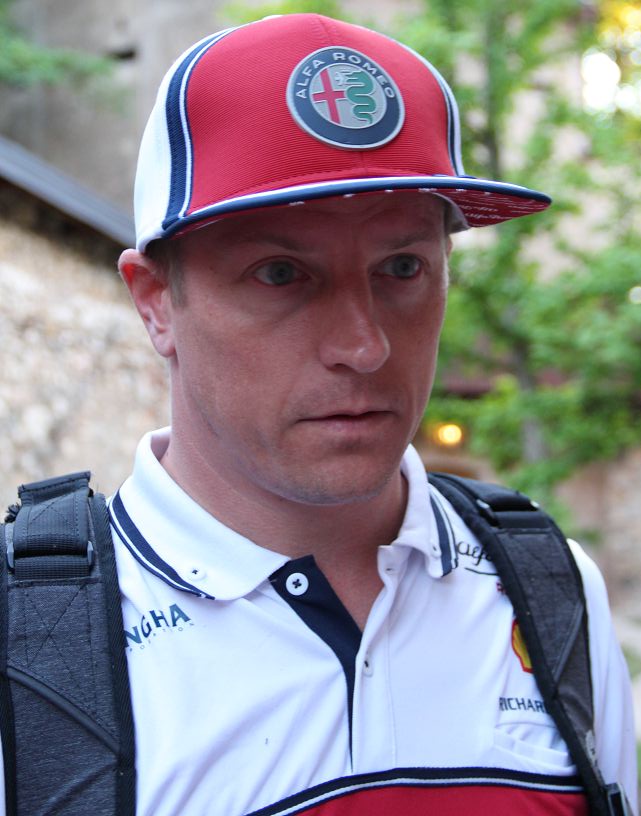
Kimi Raikkonen: His Final Stint as F1 Championship Leader
In the annals of Formula 1, few names evoke as much respect, adoration, and sheer coolness as Kimi Räikkönen. Known affectionately as "The Iceman," his career was a captivating blend of raw speed, strategic brilliance, and an utterly unique, often unfiltered, personality. While his crowning achievement was the dramatic 2007 Drivers' Championship, Räikkönen experienced another significant, albeit brief, moment at the pinnacle of the sport years later. This article delves into his final stint as an F1 Championship leader, exploring the race that put him there, the underlying strategic genius, and the lingering echoes of his dramatic kimi mundial f1 triumph from years past.
The Unforgettable Start: Kimi's 2013 Australian GP Triumph
The 2013 Formula 1 season kicked off with an air of anticipation and significant change. Michael Schumacher had retired for the second and final time, Lewis Hamilton had made a surprising switch to Mercedes, and a new generation of talent, including Valtteri Bottas and Esteban Gutiérrez, was making their debut. The season opener, the Australian Grand Prix, in Melbourne, promised an unpredictable affair, and it certainly delivered.
The weekend was unusual from the outset. Heavy rain on Saturday forced the cancellation of the Q3 qualifying session, pushing it to Sunday morning just hours before the race. This led to a "green" track – one not rubbered in by extensive running – and combined with the often-fickle Melbourne weather, it created a challenging scenario for tire management, a characteristic feature of F1 in that era that Kimi would famously exploit.
Starting from a modest seventh position on the grid in his Lotus-Renault, Räikkönen showcased his signature calm and surgical precision. He made immediate progress at the start, quickly dispatching rivals. Crucially, in a race where most front-runners opted for a three-stop strategy, Kimi executed a masterful two-stop plan. His second set of tires, applied as early as lap 10, had to last until lap 34 – a monumental stint that few could manage with such effectiveness. This aggressive yet controlled strategy allowed him to save a precious pit stop, giving him a significant advantage over competitors who were struggling with tire degradation.
By the time Adrian Sutil, who had briefly led the race in his Force India, made his final stop, Räikkönen had established a comfortable lead. He crossed the finish line a commanding 12.4 seconds ahead of Ferrari’s Fernando Alonso, demonstrating a pace and control that was nothing short of stratospheric. This victory not only marked his second win in four races (following his memorable Abu Dhabi triumph in 2012) but also put him at the top of the kimi mundial f1 standings – a position he hadn't held since his championship-winning season.
It was a truly unexpected win, reminding everyone of the Iceman's enduring class. Yet, in a twist of irony, this would prove to be his only victory of the 2013 season, and he would have to wait over five long years, 2044 days to be precise, for his next and potentially final F1 win. Despite maintaining his challenge to Sebastian Vettel for a few more races, the Lotus car and team, punching above their weight, eventually couldn't sustain the momentum, and Kimi's time as championship leader was fleeting.
A Near Miss: The 2007 Title and the Fuel Scandal That Almost Rewrote History
Before his 2013 resurgence, Kimi Räikkönen had already etched his name into F1 lore with his 2007 Drivers' Championship. That season was a nail-biting, three-way title fight that went down to the very last race in Brazil. Kimi, starting the final Grand Prix third in the standings, snatched victory from Lewis Hamilton and Fernando Alonso in one of the most thrilling conclusions in F1 history, securing his first and only kimi mundial f1.
However, the drama didn't end with the checkered flag. In a stunning post-race development, the FIA announced an investigation into the fuel temperatures of several cars, specifically those of BMW Sauber (Nick Heidfeld, Robert Kubica) and Williams (Nico Rosberg, Kazuki Nakajima). The crucial allegation was that the fuel temperature in these cars, particularly after the race, did not comply with the established regulations.
Why was this significant? Rosberg, Kubica, and Heidfeld had finished 4th, 5th, and 6th respectively, all in the points. Had they been disqualified, Lewis Hamilton, who finished 7th, would have been promoted to 4th place. This promotion would have seen him gain an additional three points, changing his total from 107 to 110, which would have been enough to clinch the championship from Räikkönen, who finished with 110 points but would have lost on countback with fewer wins. The prospect of such a late, decisive intervention by the stewards, following a season marked by controversial FIA decisions that often seemed to favor Hamilton, sent shockwaves through the F1 community.
For Ferrari and Räikkönen fans, it was a moment of immense anxiety. After all the on-track battles, the idea that the championship could be decided in the stewards' room was almost unbearable. Ultimately, the FIA ruled that there was insufficient evidence to prove an advantage had been gained, and no disqualifications were made. Kimi’s championship victory stood, a testament to his fighting spirit and a lucky escape from a potential bureaucratic nightmare. This incident perfectly encapsulates the fine margins and high stakes involved in the pursuit of the F1 2007: How a Fuel Scandal Nearly Cost Kimi the Title, and how close Kimi came to losing his defining achievement.
The Iceman's Legacy: Consistency, Strategy, and Enduring Appeal
Kimi Räikkönen’s career was defined by more than just his championship wins or fleeting moments at the top. It was about his unique approach to the sport. His nickname, "The Iceman," wasn't just for show; it perfectly captured his preternatural calm under pressure, his focused determination, and his seemingly effortless ability to extract maximum performance from any car he drove. His strategic brilliance in races like the 2013 Australian Grand Prix wasn't an anomaly; it was a recurring theme throughout his career, often masked by his laconic demeanor.
Beyond his racing prowess, Kimi's enduring appeal lay in his authenticity. In an increasingly corporate and media-trained world of Formula 1, Kimi was a breath of fresh air. His famous radio messages, his indifference to media obligations, and his unwavering focus on the pure act of racing endeared him to millions of fans worldwide. He consistently delivered exciting moments, from stunning overtakes to clutch victories, even in cars that weren't always top contenders.
His longevity in the sport, spanning two decades and multiple teams (Sauber, McLaren, Ferrari, Lotus, Alfa Romeo), speaks volumes about his talent and commitment. He was a driver who could adapt to changing regulations, tire philosophies, and team dynamics, always remaining competitive. His ability to perform at a high level for so long is a testament to his fundamental understanding of racing and his consistent application of skill and strategy.
Beyond the Podium: Kimi's Enduring Impact on F1
As Kimi Räikkönen announced his retirement from Formula 1 in September 2021, the sport prepared to bid farewell to one of its most iconic figures. Alfa Romeo, his final team, organized a fitting and unforgettable tribute, celebrating his remarkable career and unique contribution to F1. It was a poignant reminder of a career that saw him become a world champion, a multiple race winner, and a beloved personality.
Kimi's impact extends beyond statistics. He leaves behind a legacy that emphasizes the importance of pure racing instinct, strategic acumen, and a refreshingly honest approach to the intense world of F1. Aspiring drivers and teams can draw valuable lessons from his career: the unwavering focus on performance, the ability to make bold strategic calls, and the importance of allowing talent to speak for itself. His absence has left a void, but his influence will undoubtedly resonate for years to come. For a deeper look into his final farewell, you can read more about The Iceman's Final Bow: Kimi Raikkonen's F1 Retirement.
From the dramatic highs of his 2007 kimi mundial f1 to the strategic brilliance of his 2013 Australian Grand Prix victory that briefly put him back at the top, Kimi Räikkönen’s career was a masterclass in resilience and talent. His final stint as championship leader, however brief, served as a powerful reminder of his enduring skill and strategic depth, cementing his place as an F1 legend whose unique persona and driving prowess will be remembered for generations.